






Back

Posted Today

Size ; 107x135 cm
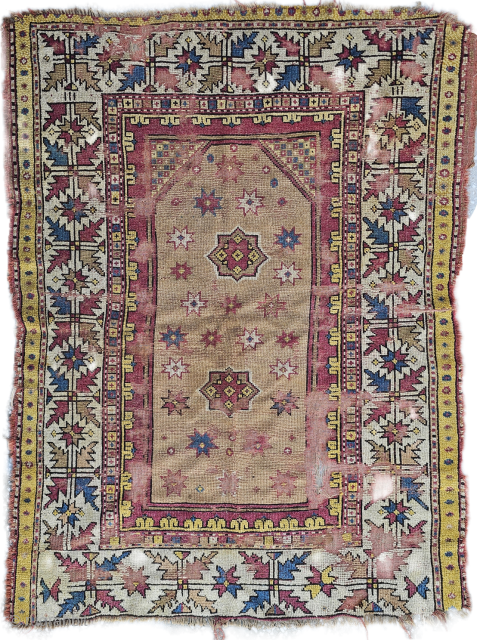
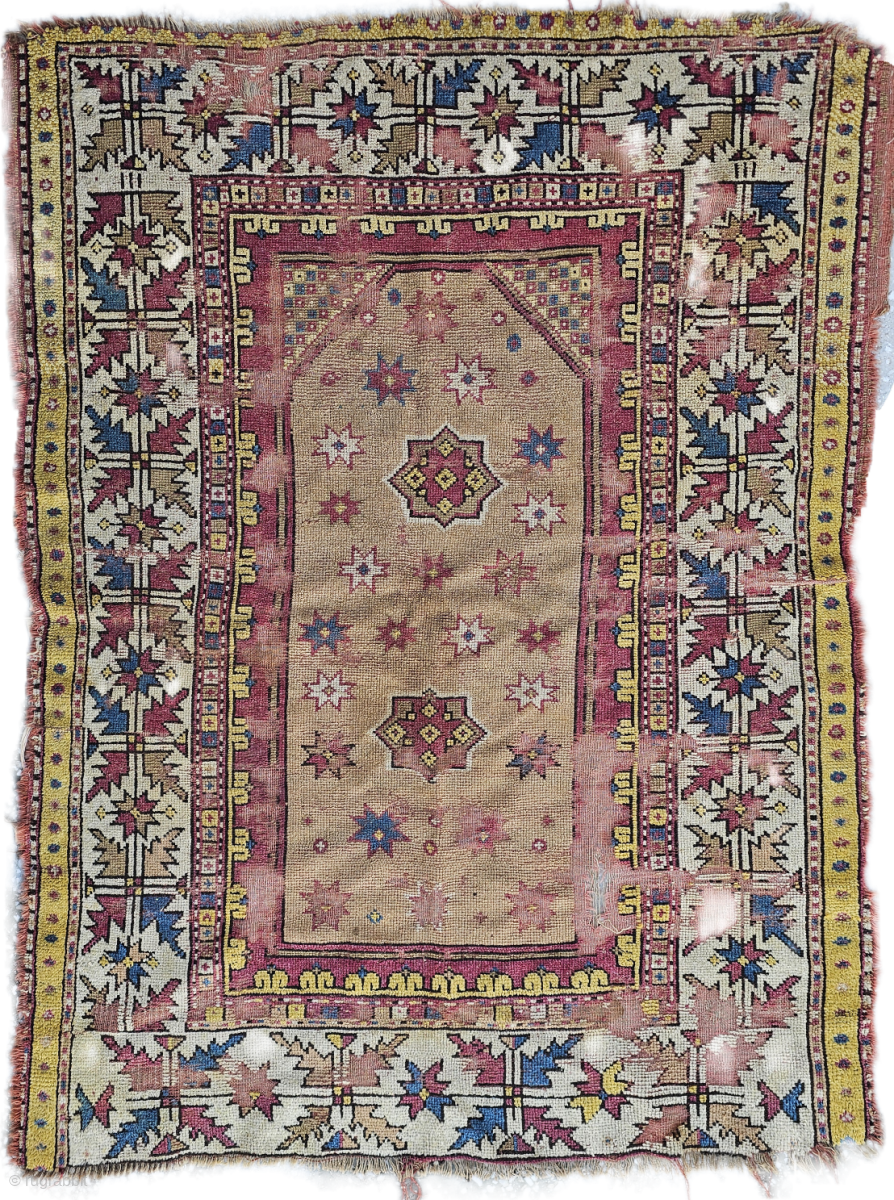
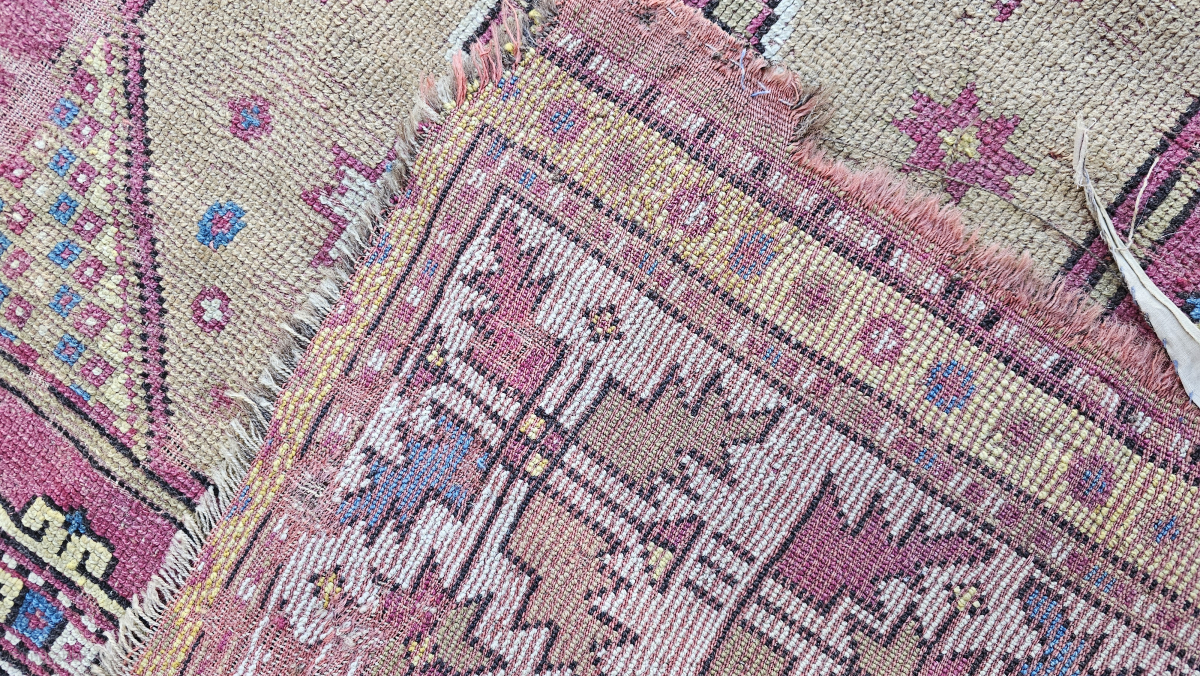
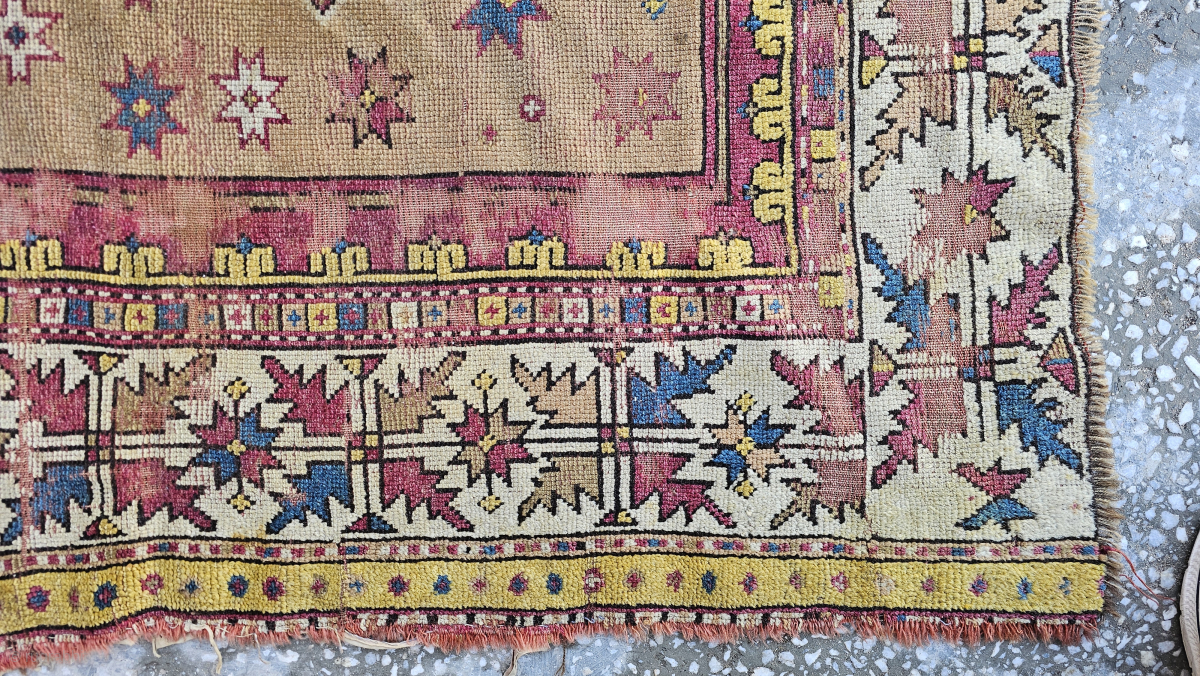
Old manastir...
The name "Manastır" originates from the region currently located within the borders of North Macedonia. However, these weavings were not limited to that area; they were also sustained by families who migrated from there to Anatolia (especially to the regions of Bursa, Balıkesir, and Çanakkale).
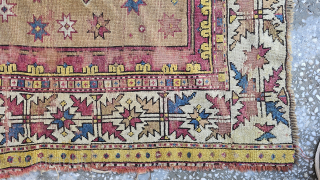
Cultural Identity: These prayer rugs are among the purest examples of the weaving tradition of the Rumelian Turks. The piece in the image is an antique, likely dating back to the late 18th or early 19th century.
2. Design and Motif Characteristics
Mihrap (Prayer Niche) Form: The arched structure in the center indicates that this is a seccade (prayer rug). In Manastır prayer rugs, the mihrap is typically plain yet prominent in this fashion.
Star Motifs: The eight-pointed stars (known as the Seal of Solomon or the Turkish Star) seen inside the mihrap and on the borders symbolize abundance and fertility.
Border Structure: The geometric and stylized floral motifs used in the wide outer borders carry a sense of "sharpness" and "symmetry" unique to Balkan weavings.
price:
Ask