







Back

Period: 18th Century
Origin: Central Anatolian
Dimensions: 77 x 395 cm
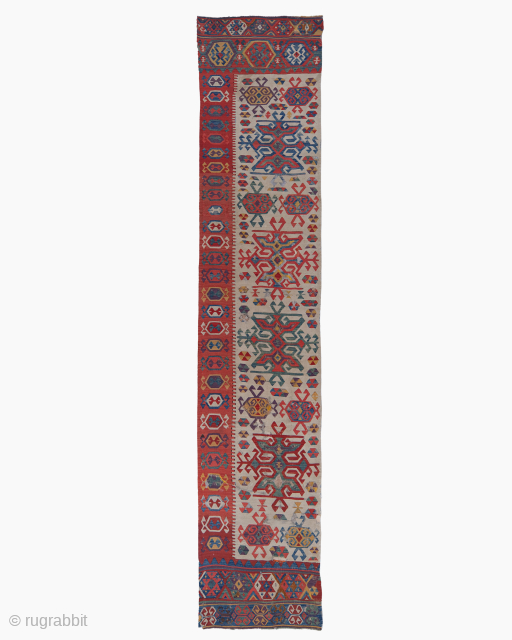
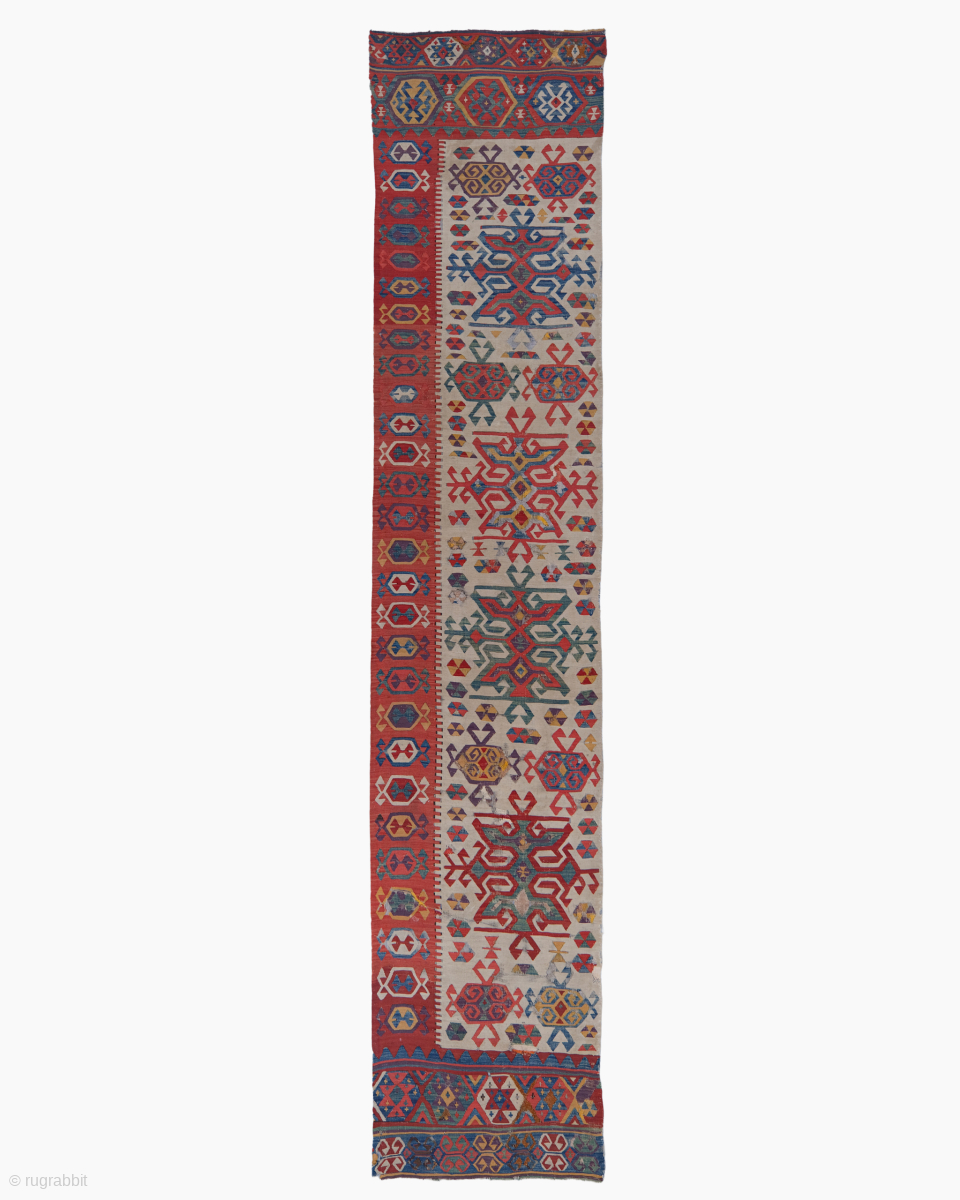
This rare 18th century Anatolian kilim is an exceptional early example of nomadic flatweave tradition, distinguished by its elongated runner format, bold tribal symbolism, and powerful geometric abstraction. Woven entirely by hand using natural wool and vegetal dyes, the kilim reflects the visual language and spiritual worldview of early Anatolian weaving cultures.
The field is organized in a vertical sequence of large central medallions, each composed of angular, interlocking motifs commonly associated with protection, fertility, continuity, and spiritual balance. These medallions are surrounded by smaller tribal symbols, amulets, and stylized motifs that function as talismans against misfortune and the evil eye.
The strong brick red ground is contrasted with shades of indigo, soft blue, ivory, ochre, and muted green, creating a striking yet harmonious palette typical of early Anatolian kilims. The use of natural dyes has resulted in subtle abrash and tonal variation, adding depth and authenticity to the composition.
A narrow yet richly patterned side border, filled with repeating geometric motifs, frames the composition and emphasizes the vertical movement of the design. The top and bottom panels feature dense, rhythmic patterns that visually anchor the kilim and highlight its architectural structure.
Kilims of this age and quality are extremely rare, particularly in such well preserved condition. This piece stands as a powerful document of early Anatolian textile art, embodying both functional nomadic craftsmanship and a deeply symbolic aesthetic language passed down through generations.
Stock No: 6319
price:
galleryaydinrugs@gmail.com