







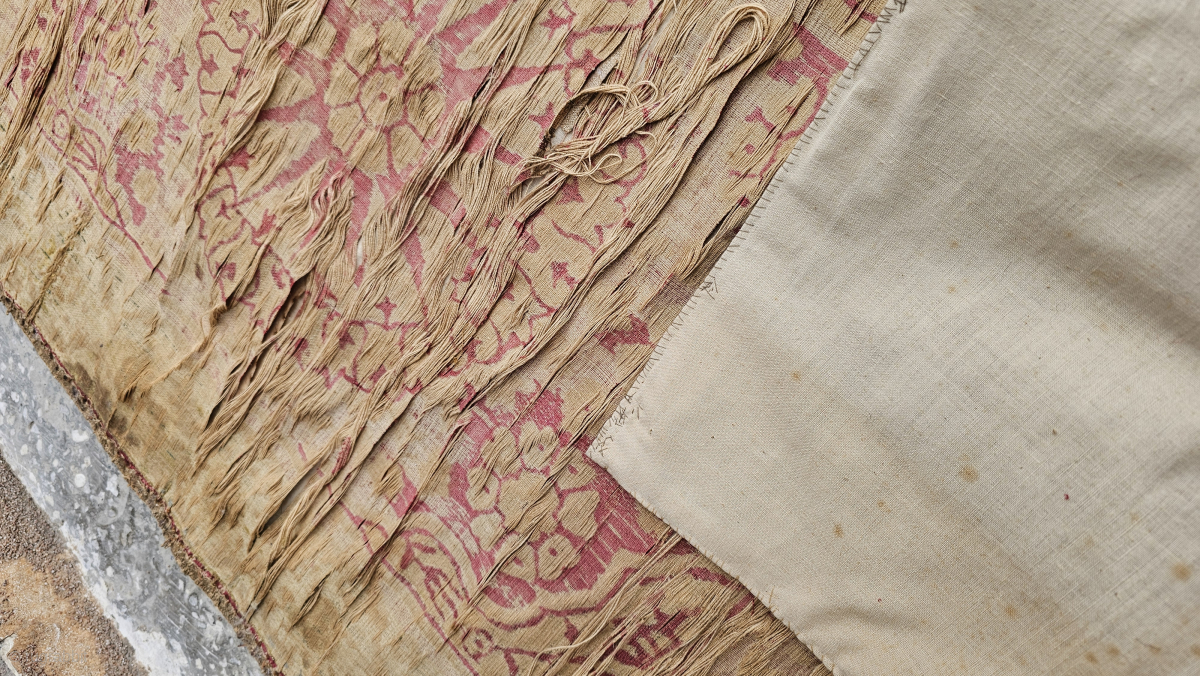
Back
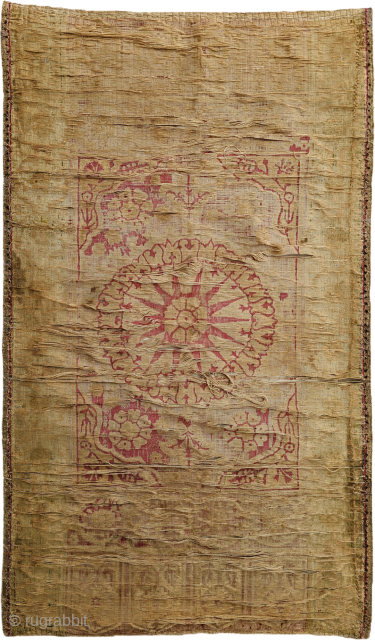

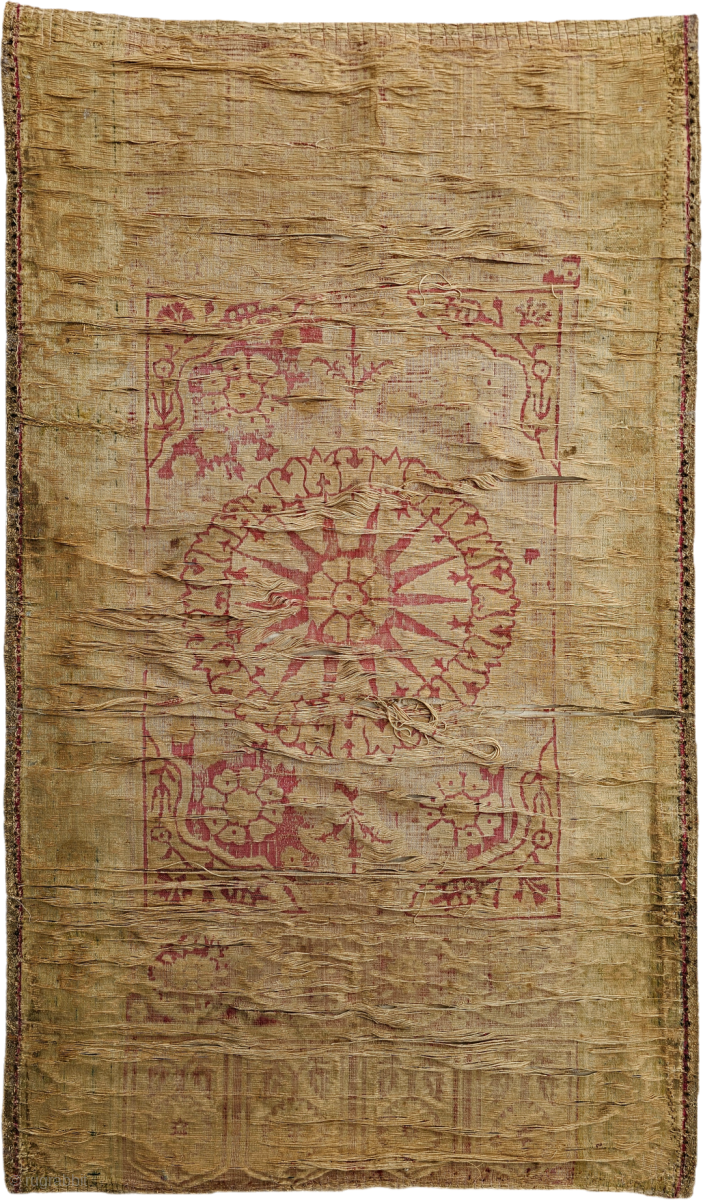

Istanbul /Uskudar
Size ; 60x105 cm
Textile fragment ...
Dating from the late 16th to the early 17th century, these fabrics are renowned for both their technical excellence and their designs that reflect the refined aesthetics of the Ottoman court.
Here are the historical origins and technical details regarding this exquisite piece:
What is Çatma?
Double-Ground Velvet: Çatma is a type of weave with a silk base and raised velvet (pile) patterns. The distinct texture seen in the piece results from the height difference between the ground and the pattern.
Metallic Thread Usage: a defining feature of this piece is the use of klaptan—silk threads wrapped in silver or gold leaf—within the ground or pattern details. While these metallic elements may oxidize and matte over time, they lend the fabric a heavy and dignified aura.
Cushion Covers: Çatma pieces of this size were generally designed as "Yastık Yüzü" (cushion covers). Displayed on sedirs (low couches) in Ottoman palaces and mansions, these grand cushions were symbols of the host's status and the value placed on guests.
Note: During this period, these fabrics rivaled Venetian velvets and were in high demand among the European aristocracy. Today, similar pieces are exhibited in the world’s most prestigious collections, including the Metropolitan Museum of Art (met) and the Victoria & Albert Museum.
price:
Ask